Download Article
Transport Minister Signs GCC Railway Link Agreement at Committee Meeting in Bahrain
Transport Minister Signs GCC Railway Link Agreement at Committee Meeting in Bahrain
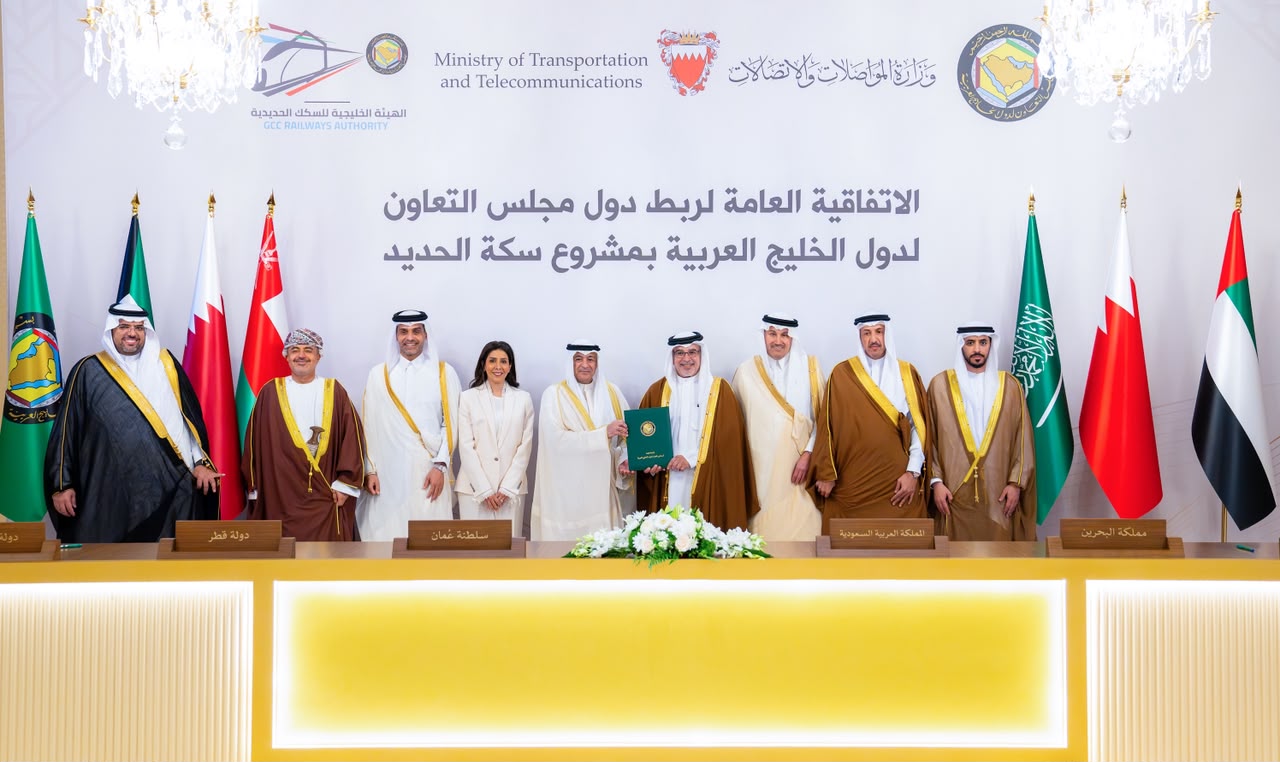
Minister of Transport and Logistic Services Saleh Al-Jasser headed the Saudi delegation participating in the meeting of the Ministerial Committee for Transport and Communications of the Gulf Cooperation Council (GCC) member states, held in the Kingdom of Bahrain to discuss ways to enhance logistics integration and advance cooperation in the sector.
In his address, Al-Jasser said the current crisis has shown the strength and resilience of Saudi Arabia's supply chains. He noted that Saudi Arabia has a strong and prosperous economy and robust, flexible logistics infrastructure, enabling it to respond efficiently to current circumstances while continuing to secure international supply chain corridors, connect global energy supplies and trade flows, and ensure the uninterrupted provision of goods, commodities, and services to beneficiaries at home and in neighboring countries.
He emphasized that Saudi Arabia's integrated and advanced transport and logistics infrastructure constitutes a fundamental pillar of its national economic strength and resilience, enhancing its ability to withstand and adapt to various crises and exceptional circumstances.
Al-Jasser noted that Saudi Arabia has 29 airports, 13 seaports along its eastern and western coasts, and a road network that ranks first globally in the Road Connectivity Index. He explained that this interconnected transport system serves as a vital artery for economic and commercial activity, facilitating the movement of people and goods throughout the Kingdom and strengthening its links with neighboring countries.
The minister stressed that Saudi Arabia regards its distinctive strategic location not merely as a geographical advantage but also as a responsibility and a commitment it proudly upholds toward its neighboring countries and the wider region.
He added that under Saudi Vision 2030 and the leadership of Custodian of the Two Holy Mosques King Salman bin Abdulaziz Al Saud and His Royal Highness Prince Mohammed bin Salman bin Abdulaziz Al Saud, Crown Prince and Prime Minister, Saudi Arabia is steadily advancing toward becoming a trusted global logistics hub and a safeguard for the stability of regional and international markets.
Al-Jasser stated that these future aspirations are clearly reflected in the directives of GCC leaders to strengthen logistics integration, particularly amid current geopolitical and economic challenges, which have further reinforced the interconnectedness and resilience of Gulf supply chains.
He invited GCC transport and communications ministers to attend the committee's next meeting, which will be chaired by Saudi Arabia, reaffirming its commitment to maintaining the momentum of cooperation.
At the conclusion of the meeting, Al-Jasser, alongside his GCC counterparts, signed the general agreement on linking member states through the GCC Railways Project. The agreement aims to strengthen integration and connectivity across the region and enhance the efficiency of the Gulf transport and logistics system.
In a related development, Al-Jasser and Bahrain's Minister of Transportation and Telecommunications Dr. Sheikh Abdulla bin Ahmed Al Khalifa signed a memorandum of understanding (MoU) on cooperation in the railway sector.
On this occasion, Al-Jasser affirmed that the signing of the MoU reflects the deep-rooted fraternal relations between Saudi Arabia and Bahrain and their shared commitment to expanding cooperation in vital sectors, serving the mutual interests of both countries and their peoples while supporting development and economic integration.
He highlighted the importance of railway cooperation and the opportunities the MoU provides to exchange expertise and technical knowledge and benefit from successful experiences and practices in developing and operating railway projects.
Such cooperation, he noted, would contribute to improving the efficiency of transport and logistics systems, facilitating passenger and freight movement, and strengthening trade exchange between the two countries.
On the sidelines of the meeting, Al-Jasser held several meetings with GCC transport ministers to explore opportunities for cooperation and partnerships in transport and logistics, contributing to the advancement of cooperation.
Check latest news

The Ministry of Transport and Logistic Services and the University of Jeddah, in collaboration with the National Industrial Development and Logistics Program (NIDLP), the Social Development Bank, Jada 30, The Shop Floor, MODON Oasis, and Future Valley Company, have launched “The Container" incubator, aimed at supporting and empowering startups and innovative ventures, and developing technological, operational and service solutions that contribute to improving service quality and fostering innovation in the transport and logistics sector. The incubator targets students at Saudi universities, innovators within the transport and logistics ecosystem, entrepreneurs, and university graduates. It offers a package of services, including incubation and acceleration, specialized mentoring and guidance, prototype and product development, access to testing and application environments, training and capacity building, investment support, and intellectual property protection. It also aims to help innovators turn their research outputs into products and projects that can be brought to market. The incubator has begun implementing its training programs and workshops according to a timeline with successive stages. These start with preparing participants and developing their skills, followed by evaluating and screening submissions and announcing the shortlisted candidates. Participants then move on to the incubation and specialized mentoring stage, culminating in a graduation ceremony and the announcement of the graduating projects. The initiative is part of efforts to strengthen partnerships between the ministry, the university, and the public and private sectors, support the innovation and entrepreneurship ecosystem, and create an enabling environment for turning entrepreneurial ideas into high-quality projects that contribute to developing the transport and logistics sector and shaping its future. It also supports the objectives of the National Transport and Logistics Strategy to consolidate Saudi Arabia’s position as a global logistics hub.
Published 11/9/2026

Minister of Transport and Logistic Services Saleh Al-Jasser headed the Saudi delegation participating in the meeting of the Ministerial Committee for Transport and Communications of the Gulf Cooperation Council (GCC) member states, held in the Kingdom of Bahrain to discuss ways to enhance logistics integration and advance cooperation in the sector. In his address, Al-Jasser said the current crisis has shown the strength and resilience of Saudi Arabia's supply chains. He noted that Saudi Arabia has a strong and prosperous economy and robust, flexible logistics infrastructure, enabling it to respond efficiently to current circumstances while continuing to secure international supply chain corridors, connect global energy supplies and trade flows, and ensure the uninterrupted provision of goods, commodities, and services to beneficiaries at home and in neighboring countries. He emphasized that Saudi Arabia's integrated and advanced transport and logistics infrastructure constitutes a fundamental pillar of its national economic strength and resilience, enhancing its ability to withstand and adapt to various crises and exceptional circumstances. Al-Jasser noted that Saudi Arabia has 29 airports, 13 seaports along its eastern and western coasts, and a road network that ranks first globally in the Road Connectivity Index. He explained that this interconnected transport system serves as a vital artery for economic and commercial activity, facilitating the movement of people and goods throughout the Kingdom and strengthening its links with neighboring countries. The minister stressed that Saudi Arabia regards its distinctive strategic location not merely as a geographical advantage but also as a responsibility and a commitment it proudly upholds toward its neighboring countries and the wider region. He added that under Saudi Vision 2030 and the leadership of Custodian of the Two Holy Mosques King Salman bin Abdulaziz Al Saud and His Royal Highness Prince Mohammed bin Salman bin Abdulaziz Al Saud, Crown Prince and Prime Minister, Saudi Arabia is steadily advancing toward becoming a trusted global logistics hub and a safeguard for the stability of regional and international markets. Al-Jasser stated that these future aspirations are clearly reflected in the directives of GCC leaders to strengthen logistics integration, particularly amid current geopolitical and economic challenges, which have further reinforced the interconnectedness and resilience of Gulf supply chains. He invited GCC transport and communications ministers to attend the committee's next meeting, which will be chaired by Saudi Arabia, reaffirming its commitment to maintaining the momentum of cooperation. At the conclusion of the meeting, Al-Jasser, alongside his GCC counterparts, signed the general agreement on linking member states through the GCC Railways Project. The agreement aims to strengthen integration and connectivity across the region and enhance the efficiency of the Gulf transport and logistics system. In a related development, Al-Jasser and Bahrain's Minister of Transportation and Telecommunications Dr. Sheikh Abdulla bin Ahmed Al Khalifa signed a memorandum of understanding (MoU) on cooperation in the railway sector. On this occasion, Al-Jasser affirmed that the signing of the MoU reflects the deep-rooted fraternal relations between Saudi Arabia and Bahrain and their shared commitment to expanding cooperation in vital sectors, serving the mutual interests of both countries and their peoples while supporting development and economic integration. He highlighted the importance of railway cooperation and the opportunities the MoU provides to exchange expertise and technical knowledge and benefit from successful experiences and practices in developing and operating railway projects. Such cooperation, he noted, would contribute to improving the efficiency of transport and logistics systems, facilitating passenger and freight movement, and strengthening trade exchange between the two countries. On the sidelines of the meeting, Al-Jasser held several meetings with GCC transport ministers to explore opportunities for cooperation and partnerships in transport and logistics, contributing to the advancement of cooperation.
Published 11/8/2026

The Ministry of Transport and Logistic Services is taking part in the sixth edition of the Hajj Conference and Exhibition, held from November 8 to 11. The ministry is participating with a pavilion that brings together entities from across the transport and logistics system, while also taking part in accompanying workshops. The participation aims to highlight the coordinated efforts of the transport and logistics system to support pilgrims, including the specialized services it provides to facilitate their movement and improve operational efficiency during the Hajj season. The ministry is also showcasing the latest technological innovations that enhance pilgrims’ experience and make it easier for them to perform their rituals. .
Published 11/8/2026
The Ministry of Transport and Logistic Services and the University of Jeddah, in collaboration with the National Industrial Development and Logistics Program (NIDLP), the Social Development Bank, Jada 30, The Shop Floor, MODON Oasis, and Future Valley Company, have launched “The Container" incubator, aimed at supporting and empowering startups and innovative ventures, and developing technological, operational and service solutions that contribute to improving service quality and fostering innovation in the transport and logistics sector. The incubator targets students at Saudi universities, innovators within the transport and logistics ecosystem, entrepreneurs, and university graduates. It offers a package of services, including incubation and acceleration, specialized mentoring and guidance, prototype and product development, access to testing and application environments, training and capacity building, investment support, and intellectual property protection. It also aims to help innovators turn their research outputs into products and projects that can be brought to market. The incubator has begun implementing its training programs and workshops according to a timeline with successive stages. These start with preparing participants and developing their skills, followed by evaluating and screening submissions and announcing the shortlisted candidates. Participants then move on to the incubation and specialized mentoring stage, culminating in a graduation ceremony and the announcement of the graduating projects. The initiative is part of efforts to strengthen partnerships between the ministry, the university, and the public and private sectors, support the innovation and entrepreneurship ecosystem, and create an enabling environment for turning entrepreneurial ideas into high-quality projects that contribute to developing the transport and logistics sector and shaping its future. It also supports the objectives of the National Transport and Logistics Strategy to consolidate Saudi Arabia’s position as a global logistics hub.
Published 11/9/2026
Minister of Transport and Logistic Services Saleh Al-Jasser headed the Saudi delegation participating in the meeting of the Ministerial Committee for Transport and Communications of the Gulf Cooperation Council (GCC) member states, held in the Kingdom of Bahrain to discuss ways to enhance logistics integration and advance cooperation in the sector. In his address, Al-Jasser said the current crisis has shown the strength and resilience of Saudi Arabia's supply chains. He noted that Saudi Arabia has a strong and prosperous economy and robust, flexible logistics infrastructure, enabling it to respond efficiently to current circumstances while continuing to secure international supply chain corridors, connect global energy supplies and trade flows, and ensure the uninterrupted provision of goods, commodities, and services to beneficiaries at home and in neighboring countries. He emphasized that Saudi Arabia's integrated and advanced transport and logistics infrastructure constitutes a fundamental pillar of its national economic strength and resilience, enhancing its ability to withstand and adapt to various crises and exceptional circumstances. Al-Jasser noted that Saudi Arabia has 29 airports, 13 seaports along its eastern and western coasts, and a road network that ranks first globally in the Road Connectivity Index. He explained that this interconnected transport system serves as a vital artery for economic and commercial activity, facilitating the movement of people and goods throughout the Kingdom and strengthening its links with neighboring countries. The minister stressed that Saudi Arabia regards its distinctive strategic location not merely as a geographical advantage but also as a responsibility and a commitment it proudly upholds toward its neighboring countries and the wider region. He added that under Saudi Vision 2030 and the leadership of Custodian of the Two Holy Mosques King Salman bin Abdulaziz Al Saud and His Royal Highness Prince Mohammed bin Salman bin Abdulaziz Al Saud, Crown Prince and Prime Minister, Saudi Arabia is steadily advancing toward becoming a trusted global logistics hub and a safeguard for the stability of regional and international markets. Al-Jasser stated that these future aspirations are clearly reflected in the directives of GCC leaders to strengthen logistics integration, particularly amid current geopolitical and economic challenges, which have further reinforced the interconnectedness and resilience of Gulf supply chains. He invited GCC transport and communications ministers to attend the committee's next meeting, which will be chaired by Saudi Arabia, reaffirming its commitment to maintaining the momentum of cooperation. At the conclusion of the meeting, Al-Jasser, alongside his GCC counterparts, signed the general agreement on linking member states through the GCC Railways Project. The agreement aims to strengthen integration and connectivity across the region and enhance the efficiency of the Gulf transport and logistics system. In a related development, Al-Jasser and Bahrain's Minister of Transportation and Telecommunications Dr. Sheikh Abdulla bin Ahmed Al Khalifa signed a memorandum of understanding (MoU) on cooperation in the railway sector. On this occasion, Al-Jasser affirmed that the signing of the MoU reflects the deep-rooted fraternal relations between Saudi Arabia and Bahrain and their shared commitment to expanding cooperation in vital sectors, serving the mutual interests of both countries and their peoples while supporting development and economic integration. He highlighted the importance of railway cooperation and the opportunities the MoU provides to exchange expertise and technical knowledge and benefit from successful experiences and practices in developing and operating railway projects. Such cooperation, he noted, would contribute to improving the efficiency of transport and logistics systems, facilitating passenger and freight movement, and strengthening trade exchange between the two countries. On the sidelines of the meeting, Al-Jasser held several meetings with GCC transport ministers to explore opportunities for cooperation and partnerships in transport and logistics, contributing to the advancement of cooperation.
Published 11/8/2026
The Ministry of Transport and Logistic Services is taking part in the sixth edition of the Hajj Conference and Exhibition, held from November 8 to 11. The ministry is participating with a pavilion that brings together entities from across the transport and logistics system, while also taking part in accompanying workshops. The participation aims to highlight the coordinated efforts of the transport and logistics system to support pilgrims, including the specialized services it provides to facilitate their movement and improve operational efficiency during the Hajj season. The ministry is also showcasing the latest technological innovations that enhance pilgrims’ experience and make it easier for them to perform their rituals. .
Published 11/8/2026